


BOB 2026 - Battle of Britain Day in Bury St Edmunds As Cadets March in Pride and Light Blue Glory


There are town occasions that announce themselves long before anyone reads an order of service. You hear them first in the measured step of polished shoes on old stone, then in the low murmur of a crowd making room, then in that small hush that falls when standards come into view.
Battle of Britain Day in Bury St Edmunds carried that sort of presence.
Across the historic heart of the town, spectators gathered to watch local cadet forces parade towards the church, filling the streets with colour, discipline and a certain unmistakable brightness. The sea of well-maintained uniforms was not just tidy. It was exact. Creases held their line. Caps sat properly. Shoes gave back the light with the quiet confidence of a cadet who had spent more than five minutes and, very likely, several stern reminders getting them right.
Among the parade, 863 (Thurston) Squadron stood out. Their light blue uniforms gleamed in the crowd, a calm and proud reminder of the air-minded service being honoured. On a day built around memory, they brought youth, energy and purpose to the centre of Bury St Edmunds.

A parade with weight behind every step
Battle of Britain Day marks one of the defining moments of the twentieth century. It remembers the air campaign fought over Britain in 1940, when Royal Air Force pilots and ground crews helped prevent invasion and changed the course of the Second World War. The phrase “the few” has become part of national memory, but remembrance is never only about famous words. It lives or fades through public acts.
That is why a parade matters.
It takes history out of books and places it in the street. It asks people to pause beside familiar buildings and see them differently for an hour. A shopfront becomes a viewing point. A church path becomes a route of honour. A market town becomes, briefly and respectfully, a stage for service.

In Bury St Edmunds, that stage is a fine one. The town does not need to try very hard to look historic. It has the kind of architecture that seems to stand a little straighter on ceremonial days, as if the stonework is also aware that standards are passing. Against that backdrop, the cadets’ formations brought a crisp, modern note to an old civic setting.
The result was not gloomy. It was not heavy-handed. It had a proud, watchful dignity, with just enough parade-day theatre to keep people smiling. Anyone who has seen a line of cadets trying to maintain total discipline while a small child waves with both hands will know that public service includes resisting the urge to grin.

The crowd became part of the BOB 2026 occasion
Crowds at remembrance events are rarely just onlookers. They shape the atmosphere. In Bury St Edmunds, the spectators gave the parade warmth without making it casual. They stood along the route, phones mostly lowered when the important moments came, watching the cadet forces move towards the church with standards held high.
There is something quietly powerful about a crowd that knows when to clap, when to fall silent, and when to simply let the moment breathe.
The best public commemorations do not rely on grand speeches alone. They depend on shared behaviour. People step back to clear the route. Parents point things out to children. Veterans and serving personnel are given space and respect. Cadets, some still young enough to look slightly surprised that so many people are watching them, carry themselves as if the whole town has lent them its trust.
That trust is no small thing BOB 2026.
A uniform in a parade is never merely clothing. It carries expectation. It says that the person wearing it has agreed, for that moment, to stand for something beyond themselves. For cadets, that can be demanding. They are young people, after all. Their usual concerns may include homework, buses, football, music, snacks, and whether anyone noticed that one button was not quite as polished as the others. Yet on parade, they step into a tradition much larger than their daily lives.
In Bury St Edmunds, they did so with credit.
The standards gave the day its centre
Every good parade has a visual language, and standards speak it fluently. They rise above the motion of the march, catching the eye as they pass. They are not decorative extras. They are symbols of unit identity, sacrifice, loyalty and continuity.
On Battle of Britain Day, standards carry particular force. They connect those who served in the past with those who gather in the present. They remind the crowd that freedom was defended by real people, with families, fears, skills and duties. They also remind the cadets that they are not performing a routine for its own sake. They are taking part in a chain of remembrance.

There was pride in how the standards moved through Bury St Edmunds. Not loud pride. Not boastful pride. The better kind. The sort that keeps its shoulders squared, its pace steady, and its shoes immaculate even when the weather and the pavement are making their own plans.
The phrase Battle of Britain, community, standards, parade, 2026 may sound like a neat set of search terms, but on the streets of Bury St Edmunds it described something more human: a town gathering around memory, public service and the next generation.
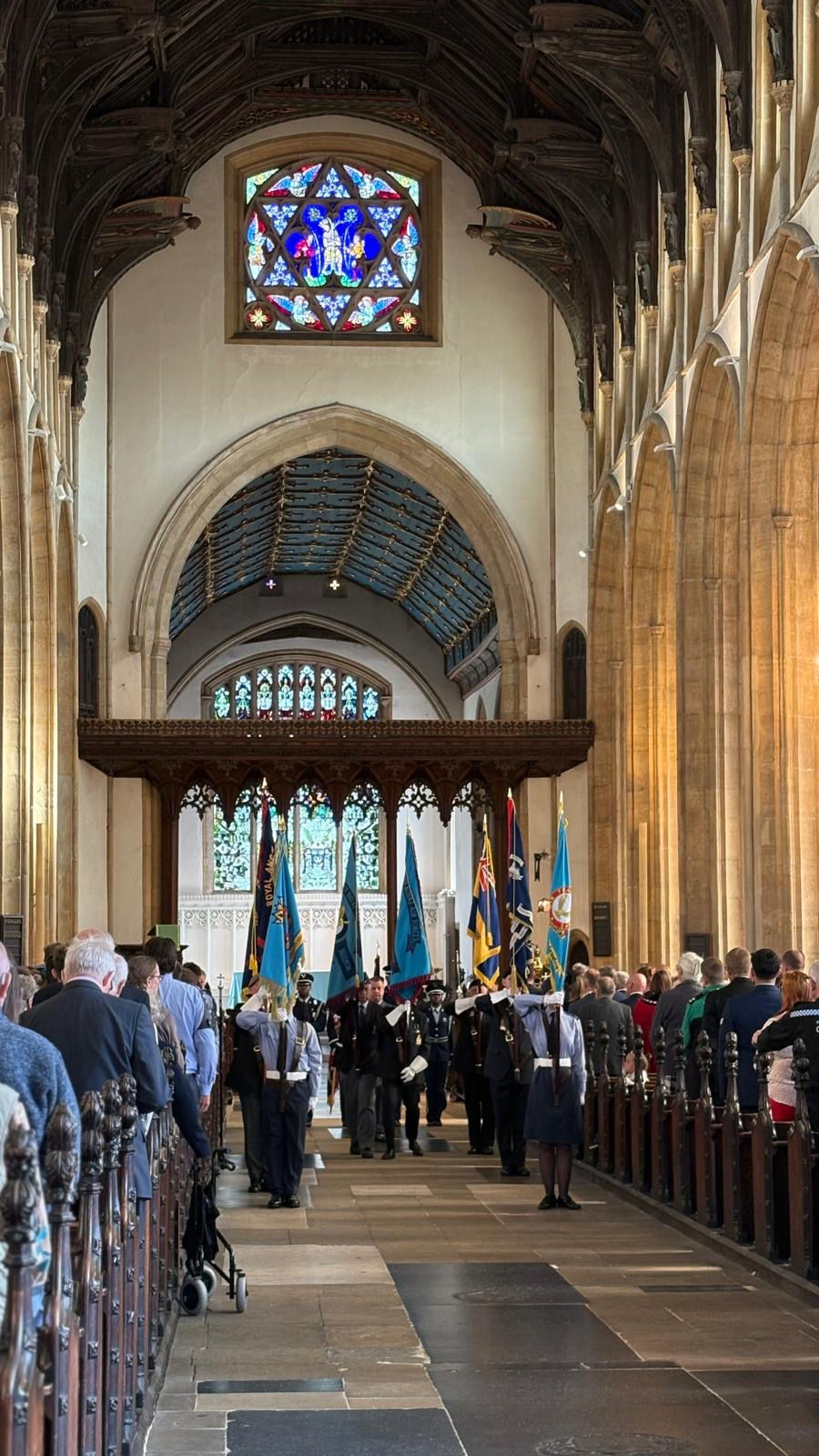
863 (Thurston) Squadron showed why cadets matter
The presence of 863 (Thurston) Squadron gave the parade one of its clearest points of focus. The light blue of the air cadet uniform carries a direct link to the service being remembered. On this day, that colour did more than look smart. It made the story visible.
The cadets were prominent, and rightly so. Their turnout reflected effort. Their bearing reflected training. Their place in the parade reflected the continuing importance of youth organisations in civic life.
Thurston Air Cadets of the Royal Air Force Air Cadets are part of a wider tradition that teaches discipline, aviation interest, leadership, teamwork and service. Yet the value of cadet forces is often seen most clearly at community events. A parade places their training in public view. It shows families, neighbours and younger children what commitment looks like when it is pressed, polished and asked to march in a straight line.
And let us be fair, marching in a straight line sounds easier than it is. The street is never a perfect parade square. There are kerbs, echoes, uneven surfaces, unexpected noises and the deeply British challenge of someone’s dog deciding it also has ceremonial responsibilities. To hold formation through all that takes concentration.
That concentration was visible. So was the pride.
For 863 (Thurston) Squadron, the day was more than an appearance. It was a statement of belonging. They were not visitors to the town’s remembrance. They were part of it.
The takeaway is simple: history feels strongest when it is honoured together. On this day, Bury St Edmunds did just that, with pride, poise and a parade smart enough to make even the church stones look impressed.


header.all-comments